Schedule Meeting

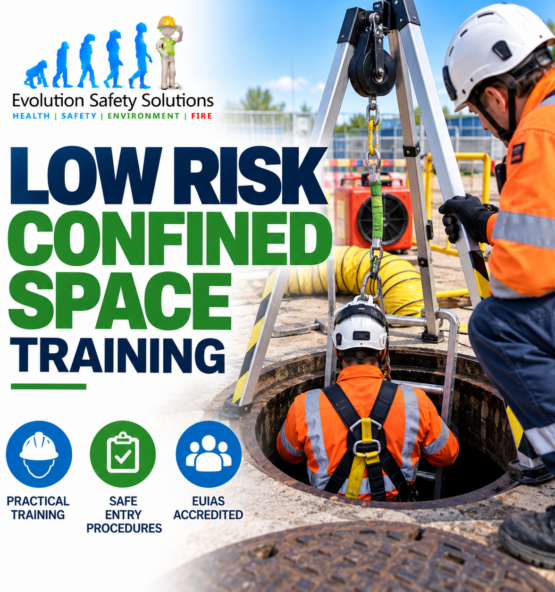
Low Risk Confined Space Training

Low Risk Confined Space Training EUIAS Accredited Confined Space Entry Course – Evolution Safety Solutions

Low Risk Confined Space Training

From £600.00 Excl Vat

This specialist training course will give your employees the necessary skills and competencies to work safely in low-risk confined space environments.
We will contact you to book dates after we receive your order.

SKU:low-risk-confined-space-trainingCategory: Tag:

Low Risk Confined Space Training – Accredited Confined Space Course

Practical Low Risk Confined Space Training in South Wales and Across the UK

Do your employees need to enter low-risk confined spaces as part of their work?

Ensure they understand the hazards, follow safe entry procedures and know what to do if conditions change.

Evolution Safety Solutions provides professional Low Risk Confined Space Training for operatives, maintenance teams, utility workers and contractors who work in controlled confined space environments.

Our training combines essential safety knowledge with practical instruction. Consequently, delegates develop the skills and understanding needed to work within the limits of their training and the employer’s safe system of work.

We offer training at our South Wales training facilities. Alternatively, we can arrange dedicated courses at suitable client premises throughout the UK.

Why choose Evolution Safety Solutions?

  • Accredited confined space training provision.
  • Experienced instructors with practical industry knowledge.
  • Training focused on safe entry and hazard recognition.
  • Practical exercises and assessment.
  • Suitable for individual delegates and employer groups.
  • Training facilities in South Wales.
  • On-site delivery available throughout the UK.
  • Guidance on selecting the correct confined space risk category.

ENQUIRE ABOUT LOW RISK CONFINED SPACE TRAINING

Call 03333 399 037 to discuss course availability or group bookings.

What Is Low Risk Confined Space Training?

Low Risk Confined Space Training prepares workers to recognise hazards and follow safe working procedures when entering confined spaces assessed as low risk.

These environments typically have straightforward access and escape arrangements. Furthermore, the risk assessment must demonstrate that relevant hazards are adequately controlled.

However, low risk does not mean no risk.

Conditions can change. For example, an unexpected release of a hazardous substance, a change in ventilation or the introduction of additional work activities could increase the risk.

Therefore, workers must understand the limits of their competence and recognise when they should stop work.

Our course focuses on identifying hazards, understanding entry requirements, following safe systems of work and responding appropriately to changing conditions.

Importantly, this training does not qualify delegates to undertake medium- or high-risk confined space entries where additional competencies are necessary.

Who Should Attend This Course?

Our Low Risk Confined Space Training is suitable for personnel whose duties involve entering environments assessed as low risk.

Typical delegates include:

  • Water and utility workers.
  • Construction operatives.
  • Maintenance engineers.
  • Facilities management personnel.
  • Mechanical and electrical contractors.
  • Telecommunications workers.
  • Property maintenance teams.
  • Local authority employees.
  • Industrial maintenance personnel.
  • Supervisors who need to understand low-risk entry arrangements.

The course may also benefit employees who are new to confined space work and require structured training before undertaking relevant duties.

However, employers must select training based on the actual work activity and risk assessment.

If your employees encounter more complex hazards, restricted escape arrangements or potentially dangerous atmospheres, a medium- or high-risk course may be more appropriate.

Not sure which confined space course your employees need?

CONTACT OUR TRAINING TEAM FOR ADVICE

What Will You Learn?

Our training focuses on the knowledge and practical behaviours needed for safe low-risk confined space work.

1. Understanding Confined Spaces

First, delegates learn what constitutes a confined space under UK legislation.

They explore how an enclosed or substantially enclosed environment can present specified risks.

Furthermore, learners consider why some workplaces that appear relatively straightforward may still require additional precautions.

2. Confined Space Legislation

Next, we explain the relevant legal duties.

Training covers the principles of:

  • Health and Safety at Work etc. Act 1974.
  • Confined Spaces Regulations 1997.
  • Management of Health and Safety at Work Regulations 1999.
  • Relevant HSE guidance, including Approved Code of Practice L101.

Delegates learn why employers must avoid confined space entry where reasonably practicable.

Where entry cannot be avoided, employers must establish a suitable safe system of work.

3. Hazard Identification and Risk Assessment

Confined spaces can contain hazards that workers may not immediately recognise.

Therefore, delegates learn to identify relevant risks before entering.

Examples include:

  • Hazardous atmospheres.
  • Oxygen deficiency or enrichment.
  • Flammable substances.
  • Flooding or liquid ingress.
  • Engulfment hazards.
  • Restricted access and escape.
  • Mechanical and electrical equipment.
  • Changes in working conditions.
  • Communication difficulties.

The training also explains why a previously low-risk environment may require reassessment.

4. Safe Systems of Work

A safe system of work establishes how personnel should undertake an activity.

Delegates learn about the importance of:

  • Suitable risk assessments.
  • Authorised entry arrangements.
  • Pre-entry checks.
  • Clear communication.
  • Appropriate supervision.
  • Correct equipment selection.
  • Safe access and egress.
  • Emergency arrangements.
  • Stopping work when conditions change.

Furthermore, we explain the importance of following site-specific procedures rather than relying solely on a training certificate.

5. Personal Protective Equipment

Delegates learn how to identify and use appropriate personal protective equipment.

The equipment required depends on the task and risk assessment.

For example, workers may need protective clothing, footwear, head protection or other task-specific equipment.

However, specialist respiratory protection or rescue equipment may indicate the need for additional training and competence.

6. Safe Entry and Exit Procedures

Safe entry begins before a worker enters the space.

Therefore, delegates learn the importance of checking the entry arrangements and confirming that the required precautions are in place.

Training considers:

  • Pre-entry checks.
  • Access arrangements.
  • Communication.
  • Maintaining awareness of conditions.
  • Safe movement.
  • Exit procedures.
  • Reporting hazards or concerns.

Practical exercises reinforce the principles covered during instruction.

7. Emergency Procedures and Rescue Awareness

Every confined space entry requires suitable emergency arrangements.

Delegates learn why employers must plan for foreseeable emergencies before work begins.

The course explains:

  • Recognising an emergency.
  • Raising the alarm.
  • Following the emergency procedure.
  • Maintaining communication.
  • The dangers of attempting an unplanned rescue.
  • The importance of designated, competent rescue personnel.

This course does not qualify delegates to undertake specialist confined space rescue operations.

8. Practical Training and Assessment

Our training reinforces theoretical knowledge through appropriate practical activities.

Delegates demonstrate their understanding of safe entry principles and relevant working procedures.

Assessment arrangements follow the requirements of the specific course and qualification being delivered.

Successful completion provides evidence of the training and assessment undertaken.

Low Risk vs Medium Risk vs High Risk Confined Space Training

Choosing the correct course is essential.

The appropriate level depends on the hazards, access arrangements, emergency provisions and required working methods.

Training levelTypical application
Low RiskControlled environments with straightforward access, escape and manageable hazards
Medium RiskWork requiring more structured entry controls, monitoring or additional emergency arrangements
High RiskEnvironments involving significant hazards and specialist equipment or procedures, potentially including breathing apparatus

These descriptions are general guidance rather than a substitute for a task-specific risk assessment.

When Is Low Risk Training Not Enough?

Low Risk Confined Space Training may be unsuitable where work involves:

  • Significant atmospheric hazards.
  • Complex access or escape arrangements.
  • A requirement for breathing apparatus.
  • More demanding entry control arrangements.
  • Specialist rescue provisions.
  • Conditions outside the learner’s assessed competence.

If your team undertakes this type of work, ask us about our medium- and high-risk confined space courses.

DISCUSS THE CORRECT TRAINING LEVEL

Why Is Confined Space Training Important?

Confined space incidents can have severe consequences.

Even routine activities can become dangerous when workers fail to recognise changing conditions.

Therefore, suitable training forms an important part of an employer’s risk management arrangements.

Protect Your Employees

Training helps workers recognise hazards and follow appropriate precautions.

Support Legal Compliance

Employers must provide suitable information, instruction and training for the work their employees undertake.

Improve Working Practices

Practical training reinforces safe entry procedures, communication and hazard reporting.

Reduce Operational Disruption

Better preparation can help prevent unsafe working practices and avoidable incidents.

Demonstrate Training and Competence

Successful completion provides evidence that delegates have undertaken relevant training and assessment.

However, employers must also consider experience, supervision, site-specific familiarisation and ongoing competence.

What Does Certification Mean for Employers?

Certification provides evidence that a learner has successfully completed the relevant training and assessment.

However, certification alone does not authorise every type of confined space entry.

Employers remain responsible for ensuring that workers have the competence, equipment, supervision and safe systems of work appropriate to their duties.

Low Risk Confined Space Training in South Wales

Evolution Safety Solutions delivers practical confined space training through our South Wales training facilities.

Our location provides a convenient option for employers and delegates travelling from:

  • Merthyr Tydfil.
  • Cardiff.
  • Newport.
  • Pontypridd.
  • Bridgend.
  • Swansea.
  • The South Wales Valleys.
  • Bristol and the South West.
  • The Midlands and wider UK.

Centre-based training provides a structured environment for learning and assessment.

Furthermore, our instructors can explain how the principles apply to common workplace activities.

ENQUIRE ABOUT TRAINING DATES IN SOUTH WALES

On-Site Low Risk Confined Space Training Across the UK

Do you need to train several employees?

We can arrange dedicated Low Risk Confined Space Training at suitable client premises throughout the UK.

On-site delivery can reduce travel requirements and help employers coordinate training around operational commitments.

Additionally, it provides an opportunity to discuss the working arrangements relevant to the organisation.

However, the venue must provide suitable facilities and meet the practical and assessment requirements of the course.

Benefits of On-Site Training

  • Convenient delivery for employer groups.
  • Reduced delegate travel.
  • Training arranged around operational needs.
  • Practical discussion of workplace procedures.
  • Consistent instruction for team members.
  • Opportunities to identify further training needs.

Contact us with your location, delegate numbers and preferred dates.

We can then discuss availability and delivery arrangements.

REQUEST A GROUP TRAINING QUOTATION

Why Choose Evolution Safety Solutions?

Experienced Training Professionals

Our instructors bring practical knowledge of health and safety and operational risk management.

Consequently, training focuses on how workers apply safe procedures in real working environments.

Accredited Training Provision

We deliver accredited confined space training through our established training services.

Practical Learning

Our approach combines essential knowledge with relevant practical exercises.

Training for Different Risk Levels

We offer confined space training across low-, medium- and high-risk categories.

Therefore, employers can discuss their requirements with one training provider.

Flexible Delivery

Choose from our South Wales training facilities or suitable on-site arrangements across the UK.

Wider Health and Safety Expertise

Evolution Safety Solutions also provides health and safety consultancy, risk assessment and related training services.

This allows employers to discuss training alongside wider workplace safety requirements.

What Should Delegates Bring?

Delegates should arrive prepared for practical training.

Depending on the course arrangements, this may include:

  • Suitable work clothing.
  • Safety footwear.
  • Photographic identification.
  • Any additional PPE specified in the joining instructions.

We will confirm the specific requirements before attendance.

Delegates should also inform the training team in advance of any relevant accessibility, learning or medical considerations that could affect safe participation.

Frequently Asked Questions

What is Low Risk Confined Space Training?

It is training for personnel who enter confined spaces assessed as low risk.

The course covers hazard recognition, legal duties, safe entry procedures and emergency awareness.

Who needs Low Risk Confined Space Training?

Workers who undertake relevant low-risk confined space activities may need this training as part of their employer’s competence arrangements.

However, the employer must select training appropriate to the work.

Is confined space training a legal requirement?

The Confined Spaces Regulations 1997 require suitable precautions for confined space work.

Employers must ensure workers receive appropriate information, instruction and training.

However, the legislation does not prescribe one universal certificate for every confined space activity.

Is this an accredited course?

Evolution Safety Solutions offers accredited confined space training.

Please confirm the exact low-risk qualification and certification arrangements when booking.

Will I receive a certificate?

Certification is subject to successful completion of the applicable training and assessment requirements.

We will confirm the awarding and registration arrangements before booking.

Can I complete Low Risk Confined Space Training online?

Practical competence cannot be established through online theory alone.

Where practical entry assessment forms part of the course, delegates must complete the required practical elements.

Contact us to discuss the available delivery arrangements.

Can you deliver the course at our workplace?

Yes. We can arrange on-site training across the UK, subject to suitable facilities and course requirements.

Can beginners attend?

The course may suit employees who are new to low-risk confined space work.

However, delegates must be capable of participating safely in the required activities.

Does this course include breathing apparatus training?

Low-risk training does not ordinarily provide the specialist competence required for breathing apparatus entry.

Where breathing apparatus is necessary, a different training level may be required.

Can I work in medium-risk confined spaces after this course?

Not solely on the basis of low-risk training.

Employers must ensure personnel hold the appropriate competence for the assessed risks.

Does the course qualify me to undertake confined space rescue?

No. Specialist rescue duties require additional training, equipment and competence.

Can employers book a private course?

Yes. We can discuss dedicated training for employer groups at suitable locations.

How do I book?

Contact our training team with your preferred dates, training location and number of delegates.

We can then confirm availability and the relevant course arrangements.

Book Low Risk Confined Space Training Today

Practical Training. Recognised Standards. Safer Working Practices.

Give your employees the knowledge and practical skills to recognise hazards and follow safe procedures during low-risk confined space work.

Evolution Safety Solutions provides professional training for individuals and organisations throughout the UK.

Whether you need places for individual delegates or a dedicated course for your workforce, our team can discuss the most suitable arrangements.

We can also advise whether your work requires low-, medium- or high-risk confined space training.

Contact us today to discuss course dates, availability and group bookings.

BOOK OR ENQUIRE ABOUT LOW RISK CONFINED SPACE TRAINING

Call 03333 399 037

Evolution Safety Solutions Ltd – Accredited Confined Space Training and Professional Health & Safety Consultancy Across the UK.

You may also like

View Options
Abrasive Wheels Training

Abrasive Wheels Training

£500.00 Excl Vat
View Options
evolution safety solutions training course in coshh awareness

COSHH Awareness Training

£500.00 Excl Vat
View Options