Schedule Meeting

Confined Space Rescue Training

Confined Space Rescue Training

Confined Space Rescue Training

£400.00 Excl Vat

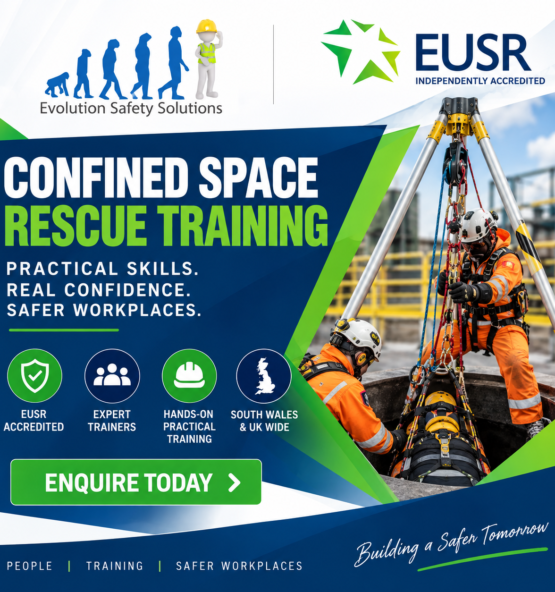
Practical one-day Confined Space Rescue Training for personnel who may participate in planned assisted casualty recovery. Training covers rescue planning, casualty handling and packaging, rescue skid and roll-up stretcher use, horizontal recovery, tripod and winch setup, vertical casualty recovery and restricted-access recovery. Available in South Wales and on-site across the UK.

QuantityDiscountPer Item Price
2-5 5% £380.00
6-9 7.5% £370.00
10+ 10% £360.00

Confined Space Rescue Training

Practical Assisted Rescue and Casualty Recovery Training

Our Confined Space Rescue Training course provides practical, role-specific training for personnel who may need to participate in a planned assisted rescue and casualty recovery from a confined space.

This one-day, predominantly practical course develops the skills needed to safely prepare, package, move and recover an injured, incapacitated or non-ambulant casualty. Learners use established rescue arrangements and commonly used confined-space rescue equipment.

The course builds on existing confined-space and first-aid competence. Therefore, it does not repeat normal confined-space entry, atmospheric monitoring, permit procedures or general first-aid training. Instead, the programme concentrates on practical assisted casualty recovery.

Training is available at our South Wales training centre. We can also deliver dedicated courses at suitable client sites throughout the UK.

Need confined space rescue training for your team?

Contact Evolution Safety Solutions to discuss availability, group bookings and on-site delivery.


Practical Confined Space Rescue Training

A confined-space emergency can leave a worker unable to leave the space without assistance.

Employers therefore need suitable emergency arrangements for foreseeable incidents. Those arrangements may include trained personnel who can participate in a planned assisted casualty recovery.

Our course develops the practical competence needed for that role.

Learners work within an established rescue plan and defined rescue-team roles. They learn how to approach and prepare a casualty, use appropriate rescue equipment and participate in controlled horizontal and vertical recovery.

The programme supports employers and dutyholders in providing appropriately trained personnel as part of their emergency arrangements under Regulation 5 of the Confined Spaces Regulations 1997.

Independently Accredited by EUSR

This Confined Space Rescue Training course is independently accredited by EUSR (Energy & Utility Skills Register), providing external recognition of the training programme and its assessment process. The course combines underpinning knowledge with practical training and competency assessment, giving employers confidence that learners are completing a structured, independently accredited programme focused on planned assisted rescue and casualty recovery from confined spaces.

What Is Assisted Confined Space Rescue?

Assisted rescue applies where a casualty cannot self-rescue and designated personnel are required to assist with their recovery.

A planned assisted rescue uses established procedures, competent personnel and suitable equipment.

During the course, learners consider the difference between self-rescue, assisted rescue and specialist rescue. They also learn to recognise situations that exceed their rescue plan, competence or available equipment.

This distinction is important. Rescue personnel should not expose themselves to the same hazard that caused the original emergency.

Where circumstances exceed the planned assisted-rescue arrangements, the response must be escalated appropriately.

Who Should Attend Confined Space Rescue Training?

This programme is suitable for personnel who already work in, or support work in, medium-risk confined spaces.

It is particularly relevant to people who may be nominated by their employer to participate in planned assisted casualty recovery.

Typical learners include:

  • confined-space entrants;
  • utility workers;
  • water and wastewater operatives;
  • maintenance personnel;
  • mechanical and electrical personnel;
  • construction personnel;
  • energy and utilities personnel; and
  • other competent personnel forming part of an employer’s confined-space emergency arrangements.

The programme is intended for people who already possess appropriate confined-space competence. It is not an introductory confined-space course.

What Will Learners Be Able to Do?

The aim of the programme is to provide practical, role-specific training for people designated to participate in assisted casualty recovery as part of the emergency arrangements for work in confined spaces.

Following successful completion, learners should be able to participate safely and effectively in a planned assisted rescue.

They will develop the knowledge and practical skills needed to:

  • understand the difference between self-rescue, assisted rescue and specialist rescue;
  • work within an established confined-space rescue plan;
  • understand individual rescue-team roles and responsibilities;
  • recognise when withdrawal or escalation is necessary;
  • identify hazards associated with assisted rescue;
  • select suitable PPE and rescue equipment;
  • complete rescue-equipment pre-use checks;
  • establish and maintain effective communication;
  • approach an incapacitated casualty safely;
  • undertake an initial casualty assessment within existing first-aid competence;
  • position and handle a casualty in a restricted environment;
  • prepare and use a rescue skid;
  • prepare and use a roll-up rescue stretcher;
  • package and secure a casualty;
  • participate in controlled horizontal casualty recovery;
  • prepare and check a tripod and compatible rescue/man-riding winch;
  • participate in controlled vertical casualty recovery;
  • control a casualty through a restricted access opening;
  • complete an effective casualty handover; and
  • undertake post-use equipment checks, reporting and debriefing.

These outcomes reflect the formal learning outcomes within the programme.

What Does the Confined Space Rescue Course Cover?

The course combines essential underpinning knowledge with extensive practical activity.

Training covers the complete planned assisted-recovery process. This starts with reviewing the rescue plan and preparing equipment. It then progresses through casualty recovery and finishes with handover, equipment checks and debriefing.

Course content includes:

  • principles of planned assisted rescue;
  • rescue-team roles and communication;
  • rescue-plan review and implementation;
  • rescue equipment selection;
  • rescue equipment inspection;
  • casualty approach and initial assessment;
  • casualty handling in restricted spaces;
  • rescue skid use;
  • roll-up rescue stretcher use;
  • casualty packaging and securing;
  • horizontal casualty recovery;
  • tripod and rescue/man-riding winch setup;
  • vertical casualty recovery;
  • restricted-opening casualty transition;
  • casualty handover;
  • post-use equipment checks;
  • reporting and debriefing; and
  • practical rescue exercises and assessment.

The programme therefore focuses on the skills personnel may actually need when participating in planned casualty recovery.

A Predominantly Practical Rescue Course

Confined Space Rescue Training should develop practical competence, not simply theoretical knowledge.

For this reason, the programme is predominantly practical.

Learners progress through a structured training sequence:

Instructor Demonstration → Instructor-Led Practice → Team Practice → Scenario Exercise → Individual Assessment

Learners first become familiar with individual pieces of equipment. They then combine those skills during complete casualty-recovery scenarios.

This approach allows instructors to coach and correct techniques before learners progress to formal practical assessment.

Rescue Equipment Selection and Inspection

Rescue equipment must be suitable for the intended recovery method.

Learners are therefore taught how to select and inspect relevant equipment before beginning a practical rescue.

Training can include:

  • rescue tripod;
  • compatible rescue/man-riding winch;
  • rescue harness;
  • lifelines;
  • rescue skid;
  • roll-up rescue stretcher;
  • suitable connectors;
  • casualty securing straps;
  • communications equipment; and
  • appropriate PPE.

Learners check equipment identification and condition. They also consider damage, contamination, wear and equipment compatibility.

Defective or suspect equipment must not simply be used because a rescue exercise has started. Learners are taught to identify, report and quarantine equipment where appropriate.

The programme specifically includes the practical use and inspection of rescue equipment.

Casualty Approach and Initial Assessment

Rescuer safety remains fundamental throughout the course.

Before approaching an incapacitated casualty, learners consider whether it is safe to do so. They must not expose themselves or other team members to unnecessary additional risk.

Once an approach can be made safely, learners practise communication and an initial casualty assessment.

The course does not teach additional clinical first-aid skills. Any casualty assessment or care remains within the learner’s existing first-aid competence.

Casualty Handling in Restricted Spaces

Moving an incapacitated casualty through a confined space can present significant manual-handling and entrapment hazards.

Learners practise controlled casualty positioning and movement within restricted environments.

They consider the recovery route before moving the casualty. They must also protect the casualty from structures, edges and other foreseeable contact points.

Effective communication between team members is maintained throughout the movement.

Rescue Skid Training

The course includes practical training in the preparation and use of a rescue skid.

Learners inspect the equipment before use. They then position the skid, transfer the casualty and secure them appropriately for the intended recovery.

Casualty protection and controlled handling remain important throughout the exercise.

Roll-Up Rescue Stretcher Training

Learners also develop practical skills using a roll-up rescue stretcher.

Training covers preparation of the stretcher, casualty positioning, packaging and securing.

Before movement begins, learners check the casualty’s position, securing arrangements and relevant attachment points.

The programme includes both rescue skid and roll-up rescue stretcher competence within its formal learning outcomes.

Horizontal Casualty Recovery

Horizontal recovery forms a significant part of the practical programme.

Learners participate in a team-based scenario involving a non-ambulant casualty who requires controlled horizontal removal from a confined space.

The exercise includes:

  • reviewing the rescue plan;
  • allocating rescue-team roles;
  • selecting and inspecting equipment;
  • establishing communication;
  • approaching the casualty safely;
  • positioning and packaging the casualty;
  • selecting the appropriate casualty-recovery device;
  • controlling horizontal movement;
  • protecting the casualty during recovery; and
  • recovering the casualty to a designated safe area.

The emphasis remains on control and coordination rather than speed.

Tripod and Rescue Winch Training

The course includes practical training with a rescue tripod and compatible rescue/man-riding winch.

Learners are taught how to position and prepare the tripod for the intended recovery.

They also complete relevant pre-use checks, establish an exclusion zone and check the compatibility of the rescue system.

Equipment must be prepared and used in accordance with the rescue plan, training provided and relevant manufacturer instructions.

Vertical Casualty Recovery

Learners progress from equipment preparation to a practical vertical casualty-recovery exercise.

The casualty must first be appropriately positioned, packaged and connected to the approved recovery system.

Team members then coordinate the recovery while maintaining clear communication.

The winch is operated in a controlled manner. Meanwhile, other members of the rescue team monitor the casualty and recovery system.

The course specifically requires competence in vertical casualty recovery using a tripod and rescue/man-riding winch.

Restricted Access Casualty Recovery

Restricted openings can present additional hazards during casualty recovery.

Potential problems include crushing, trapping, snagging and uncontrolled casualty movement.

Learners therefore practise controlling the casualty as they approach and pass through a restricted opening.

Team members coordinate the recovery system and casualty handlers. They must maintain communication while protecting the casualty’s head and limbs.

Movement continues only while the casualty remains controlled.

Casualty Handover and Post-Rescue Actions

Recovery to a safe area does not end the rescue process.

Learners practise completing an appropriate casualty handover in accordance with the established arrangements.

They then inspect equipment used during the recovery.

Any damage, contamination or abnormal operation must be identified and dealt with appropriately. Defective or suspect equipment may require quarantine.

Finally, learners participate in a structured debrief and identify relevant learning from the exercise.

Confined Space Rescue Training Assessment

Assessment includes both knowledge and practical competence.

Learners must successfully demonstrate the required standard in both areas.

Knowledge Assessment

Learners complete a 20-question multiple-choice knowledge assessment.

Questions cover subjects such as rescue planning, roles, hazards, equipment, communication, casualty considerations, escalation and post-rescue actions.

The pass mark is 80% – 16 correct answers from 20 questions.

Two assessment papers are maintained to support assessment security.

Where a learner does not achieve the required knowledge standard, feedback and additional instruction are provided before reassessment.

Practical Rescue Assessment

Each learner is also individually assessed through practical observation.

The learner operates as part of a rescue team but must demonstrate their own competence.

Assessment includes:

  • rescue-plan review and individual role;
  • equipment selection and inspection;
  • communication;
  • casualty approach and assessment;
  • casualty handling;
  • rescue skid and/or roll-up stretcher use;
  • casualty packaging;
  • horizontal recovery;
  • tripod and winch preparation;
  • vertical recovery;
  • restricted-opening transition;
  • casualty handover;
  • post-use equipment checks; and
  • reporting and debriefing.

A learner cannot achieve a successful practical assessment solely through the actions of other team members.

Unsafe actions that could place the learner, casualty or another rescue-team member at significant risk will result in assessor intervention.

Confined Space Rescue Training Prerequisites

This course builds on existing competence.

Learners must therefore hold a current recognised third party accredited Confined Space qualification.

Learners must also hold a current accredited First Aid at Work qualification.

Evidence of prerequisite qualifications is required prior to attendance.

Learners must also have sufficient physical capability to participate safely in practical rescue exercises involving casualty handling and rescue equipment.

Unsure whether your team’s existing qualifications meet the prerequisites?

Contact Evolution Safety Solutions and we can review your training requirements before booking.

How Long Is Confined Space Rescue Training?

This is a one-day course.

Total course duration is approximately six hours, including breaks and assessment.

A typical training day runs from approximately 09:00 to 15:30.

The programme includes classroom instruction, practical demonstrations, supervised exercises, rescue scenarios and assessment.

Confined Space Rescue Training in South Wales

Evolution Safety Solutions delivers Confined Space Rescue Training in South Wales from our dedicated training facilities.

Our location provides a practical option for businesses throughout Wales, the South West, Midlands and wider UK.

Dedicated courses can be arranged for employers who need to train several members of a confined-space team.

For current course availability, contact our training team.

Enquire About Confined Space Rescue Training

On-Site Confined Space Rescue Training

We can also provide on-site confined space rescue training throughout the UK, subject to suitable training facilities and arrangements.

On-site delivery can be particularly useful for employers with several personnel requiring training.

It may also allow practical activities to reflect relevant workplace rescue arrangements and equipment. However, the location must be suitable for controlled and safe training and assessment.

We will discuss the proposed facilities and training arrangements with you before confirming on-site delivery.

What This Course Does Not Cover

The broader term “confined space rescue training” covers several very different levels of rescue competence. Therefore, it is important to understand the limits of this programme.

This course provides training in planned assisted casualty recovery.

It does not qualify a learner as a specialist technical rescue operative.

The programme does not cover:

  • rescue using working breathing apparatus;
  • entry into irrespirable atmospheres;
  • specialist rope rescue;
  • water rescue;
  • engulfment rescue; or
  • other specialist technical rescue disciplines.

These exclusions are expressly defined within the course programme.

Where a risk assessment identifies foreseeable rescue situations requiring specialist capabilities, employers will need appropriate additional rescue arrangements.

Confined Space Rescue Training and the Confined Spaces Regulations 1997

The programme is mapped principally against the Confined Spaces Regulations 1997 and HSE L101 – Safe Work in Confined Spaces.

In particular, it supports the emergency arrangements associated with Regulation 5.

The programme develops practical competence for personnel who may be designated to participate in planned assisted casualty recovery.

The training also addresses areas identified within HSE L101 relating to rescue equipment, equipment checks, emergency procedures, rescue techniques, practical rehearsals and realistic casualty simulations.

Maintaining Rescue Competence

Formal training should form part of wider arrangements for maintaining rescue competence.

Personnel who actively form part of an employer’s confined-space rescue arrangements should undertake suitable familiarisation, drills and rescue exercises between formal courses.

Those activities should reflect the employer’s risk assessment, rescue arrangements, equipment and operational requirements.

Regular practice helps personnel maintain familiarity with equipment, communication arrangements and their individual rescue-team responsibilities.

Why Choose Evolution Safety Solutions?

Evolution Safety Solutions provides professional health and safety consultancy and training services to organisations throughout the UK.

Our Confined Space Rescue Training programme places practical competence at the centre of the training.

Learners do not simply receive information about rescue techniques. They prepare equipment, handle and package casualties, participate in rescue exercises and demonstrate their competence through individual assessment.

The structured programme progresses from underpinning knowledge and instructor demonstration through to realistic simulated rescue scenarios.

This provides employers with a clear training and assessment process for personnel who may participate in planned assisted casualty recovery.

Book Confined Space Rescue Training

If your personnel work in medium-risk confined spaces and may be expected to participate in planned casualty recovery, contact Evolution Safety Solutions to discuss your requirements.

We can provide training at our South Wales training facilities or discuss on-site delivery anywhere in the UK.

When contacting us, please provide your:

  • preferred training location;
  • approximate number of learners;
  • preferred dates;
  • existing confined-space qualifications; and
  • on-site training requirements, where applicable.

Need a Dedicated Course for Your Team?

Speak to us about course availability and group bookings.

Contact Evolution Safety Solutions